

Would you hand your dog a chicken foot? Plenty of pet parents flinch at the idea. Their dogs almost never do.
Chicken feet for dogs have gone from farm-kitchen scraps to one of the most requested natural chews in pet stores. They are affordable and crunchy. They also contain the same compounds found in many joint supplements. They do raise fair questions about bones, raw meat, and portion size.
This guide answers each question so you can decide whether chicken feet belong in your dog’s treat rotation.

Yes, dogs can eat chicken feet. Most healthy adult dogs handle them well when the feet are raw or dehydrated at low temperatures and fed under supervision.
Cooked chicken feet are the exception. Boiling, roasting, or frying makes bones brittle, and brittle bones can splinter.
For most dogs, the answer is yes. A chicken foot is mostly skin, tendon, cartilage, and tiny bones. That combination delivers nutrients you rarely find in a processed biscuit.
Chicken feet are one of the richest whole-food sources of glucosamine and chondroitin. Both compounds help maintain cartilage and support joint mobility. That makes chicken feet a popular pick for active dogs, large breeds, and seniors.
The skin and tendons are loaded with collagen. Collagen supports connective tissue and contributes to healthy skin and a glossy coat.
Crunching through a dried chicken foot creates gentle friction against the teeth. This can help scrape away soft plaque before it hardens into tartar. It will not replace brushing, but it is a useful extra for oral health.
A quality chicken foot treat has one ingredient: chicken feet. It contains no grains, fillers, or artificial preservatives. That simplicity suits dogs with food sensitivities.
Both formats work. The right choice depends on your household, your dog, and how much mess you can tolerate.
Raw chicken feet for dogs are a staple in raw-feeding homes. The bones stay soft and bendable. The trade-offs are real, though:
Can dogs eat raw chicken feet? Healthy adult dogs often can. Puppies, seniors, and dogs with weakened immune systems are better suited to a gently dried option. Always wash your hands and surfaces after handling raw meat.
Dehydrated chicken feet for dogs are dried slowly at low heat. This removes moisture while keeping the bones crunchy and crumbly instead of sharp. They are:
For most families, dehydrated is the practical sweet spot between safety and convenience.
High-heat cooking changes bone structure. The bones turn hard and brittle, which raises the risk of choking, mouth injuries, and gut damage. Never feed cooked chicken feet from the kitchen.
Vets commonly recommend that treats make up no more than 10% of your dog’s daily calories. Use these amounts as a starting point:
Start with a single foot. Watch your dog’s stool for 24 hours before offering more.
Follow these steps every time:
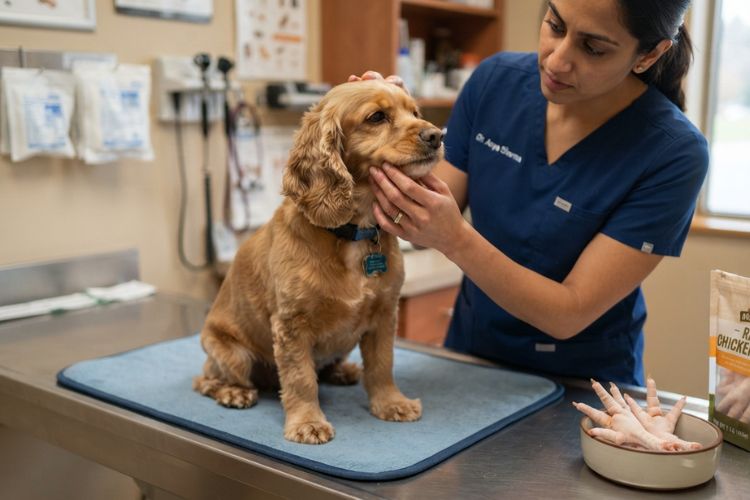
Chicken feet are not right for every dog. Talk to your vet first if your dog:
Chicken feet for dogs offer natural joint support, a light dental clean, and lean protein in a single ingredient. Raw works for experienced raw feeders. Dehydrated works for almost everyone else. Cooked chicken feet should never be fed. Portion sensibly, supervise every chew, and your dog gets a treat that does more than taste good.
Baby Boy Treats was founded by two professional chefs, Diana and Alfonso. They make every batch by hand in small quantities using slow, low-heat drying. Our chicken feet contain one ingredient and nothing else.
Shop our dehydrated chicken feet and give your dog a crunchy, joint-friendly chew today.
Are chicken feet safe for puppies?
Puppies can try dehydrated chicken feet once their adult teeth start coming in. Pick smaller feet and supervise closely. Check with your vet if your puppy is very young.
Do chicken feet have bones?
Yes. Each foot has several small, thin bones. When raw or dehydrated at low heat, these bones stay soft or crumbly enough for most dogs to chew safely.
How long do dehydrated chicken feet last?
Stored in a sealed bag away from heat and humidity, they typically stay fresh for several months. Always check the best-by date on the package.
Can chicken feet replace a joint supplement?
They can support joint health, but they are not a medical treatment. Dogs with arthritis or diagnosed joint issues should follow the plan their vet recommends.