
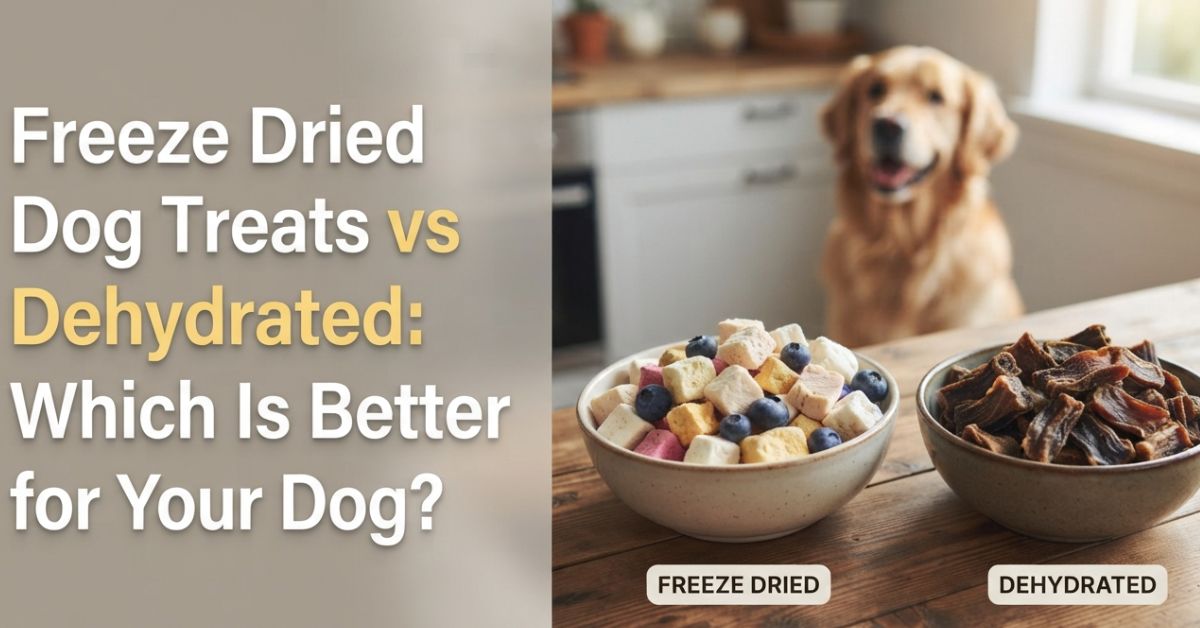
Freeze-drying removes up to 98% of a food’s moisture without cooking it. Dehydrating does the job with gentle, circulating heat. Both methods create shelf-stable, meaty treats, yet they produce very different results in your dog’s bowl.
If you have stood in the treat aisle wondering which to buy, this guide breaks down the real differences. It covers nutrition, texture, shelf life, and price.
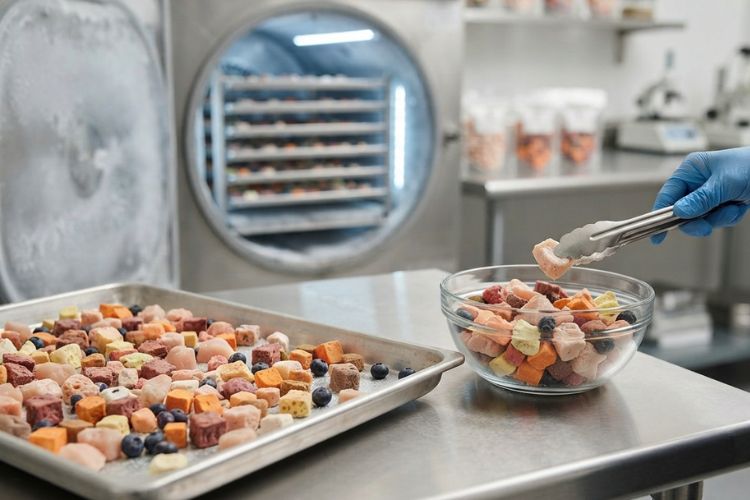
Freeze dried dog treats are made by freezing raw meat, then placing it in a vacuum chamber. Inside the chamber, ice turns directly into vapor. This process is called sublimation.
Because the meat is never cooked, freeze-drying keeps:
Dehydrated dog treats are dried slowly with warm air over many hours. The gentle heat pulls moisture out while lightly cooking the meat.
The result:
| Factor | Freeze-Dried | Dehydrated |
| Process | Freezing and vacuum | Low, steady heat |
| Moisture removed | Up to 98% | Most, with a little remaining |
| Nutrient retention | Highest | High |
| Texture | Light and crumbly | Chewy or crunchy |
| Weight | Very light | Denser |
| Chew time | Short | Longer |
| Price | Higher | Lower |
| Best for | Training, picky eaters | Chewing, dental benefit |
Are freeze dried treats good for dogs? Yes. They are one of the cleanest treat formats available.
With no high heat involved, more of the natural vitamins, minerals, and amino acids stay intact.
Freeze-dried pieces crumble easily. You can break one treat into many small rewards.
The concentrated smell wins over even fussy dogs. Many owners crumble freeze-dried pieces over kibble as a meal topper.
Most freeze-dried treats contain one ingredient, so there are fewer triggers for dogs with food sensitivities.
Dehydrated options shine in other situations:
Freeze dried chicken dog treats are lean, mild, and widely tolerated. They make an easy starting point for dogs new to meat-based treats.
Freeze dried liver dog treats are the classic high-value reward. They are nutrient-dense and deeply aromatic. Trainers rely on them for recall and distraction-heavy sessions.
Chicken hearts for dogs are an underrated organ treat. They are a natural source of taurine, an amino acid that supports heart health. They also provide iron and B vitamins. Freeze-drying keeps them bite-sized and easy to portion.
Ask these four questions:
There is no single winner between freeze dried dog treats and dehydrated dog treats. Freeze-dried keeps the most nutrients and makes an ideal training reward. Dehydrated offers longer chew time, dental benefits, and better value. The smartest approach is to use both, matched to the moment.
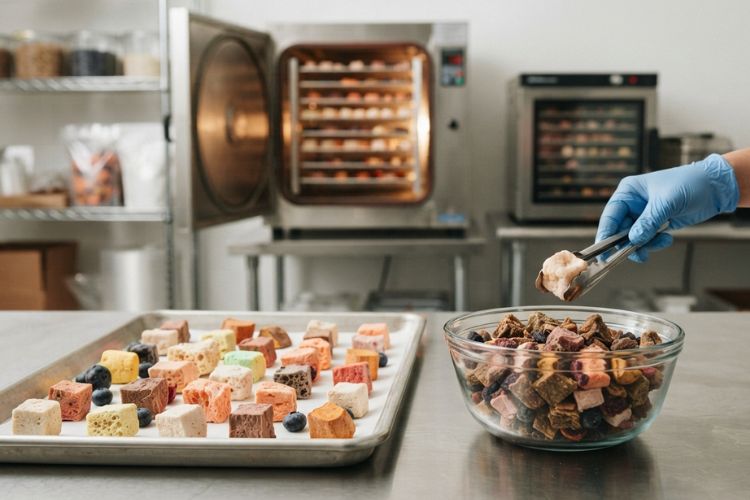
Baby Boy Treats offers both freeze-dried and dehydrated treats, handmade in small batches by professional chefs. Choose from freeze-dried chicken hearts, freeze-dried beef hearts, liver, chicken feet, and pig ears.
Shop freeze-dried and dehydrated dog treats and find your dog’s new favorite.
Are freeze-dried treats raw?
Most are. Freeze-drying does not cook the meat, so the treat stays nutritionally raw. Handle it with clean hands.
Do freeze-dried treats need refrigeration?
No. They are shelf-stable when sealed and stored somewhere cool and dry.
Yes. A splash of warm water softens them. This works well for senior dogs or dogs with dental issues.
Why are freeze-dried treats more expensive?
The process takes longer and uses specialized equipment. You also get more protein per ounce because almost all the water is gone.