
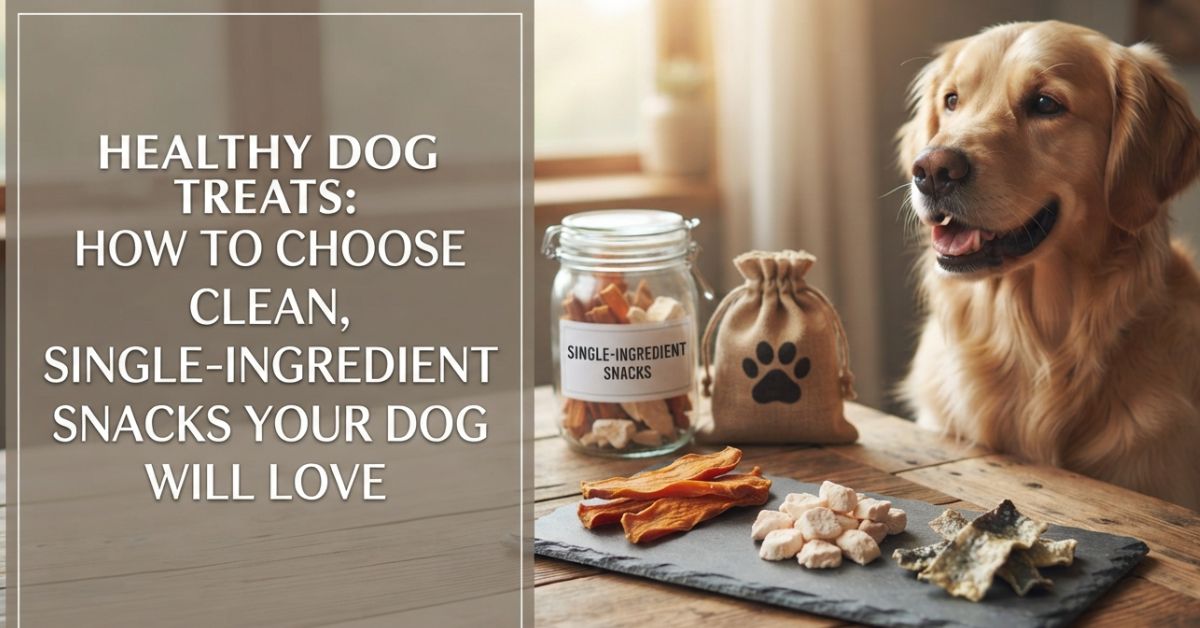
A 2022 survey by the Association for Pet Obesity Prevention found that 59% of dogs in the U.S. were overweight or obese. Treats are one of the most common and most overlooked contributors.
That doesn’t mean you need to stop rewarding your dog. It means you need better rewards. Healthy dog treats let you keep the tail wags without the hidden sugar, fillers, and empty calories.
This guide shows you exactly how to tell a healthy treat from one that only looks healthy.
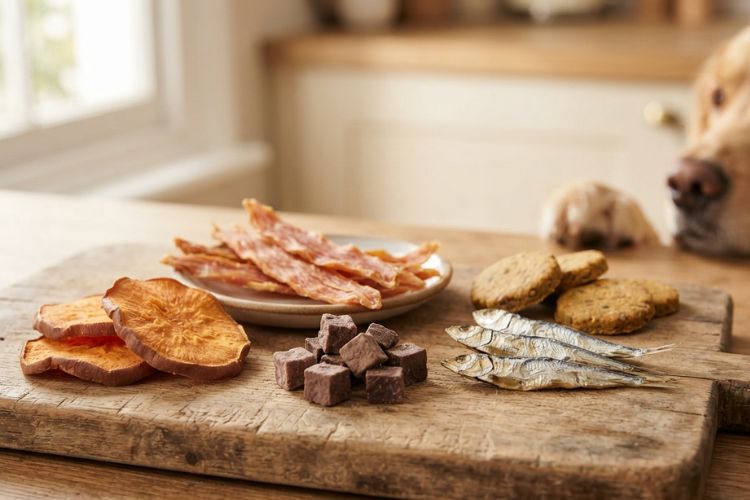
Healthy treats for dogs share a few clear traits:
Marketing words like “natural” and “wholesome” don’t guarantee much. The label tells the real story.
Single ingredient dog treats are exactly what they sound like: one food, nothing added. Examples include dehydrated chicken feet, freeze-dried beef liver, and pig ears.
Their benefits include:
Dogs with digestive issues need extra care. The best dog treats for sensitive stomachs are:
Every added ingredient is another possible trigger. Single-ingredient options make it easier to spot what your dog tolerates.
Chicken and turkey are often easier to digest than richer meats. Rotate slowly and one protein at a time.
Fatty treats like pig ears can upset delicate stomachs. Choose leaner options, such as chicken hearts or chicken liver in small amounts.
Start with one small piece. Wait 24 to 48 hours before offering more.
Grain free dog treats aren’t automatically healthier. Some swap grains for potatoes, peas, or other fillers.
Here is what matters:
If you want grain-free, choose treats that are grain-free because they are simply meat.
Different moments call for different treats:
| Purpose | Best Healthy Option |
| Training | Freeze-dried liver or chicken hearts |
| Long chewing | Pig ears or chicken feet |
| Joint support | Chicken feet |
| Picky eaters | Freeze-dried beef liver |
| Sensitive stomachs | Chicken hearts, in small amounts |
Follow the 10% rule. Treats should make up no more than 10% of your dog’s daily calories. The other 90% should come from a complete, balanced diet.
Quick tips:
Watch out for:
Healthy dog treats aren’t about fancy packaging. They come down to clean ingredients, real protein, and sensible portions. Single-ingredient options remove the guesswork, suit sensitive stomachs, and are naturally grain-free. Read labels closely, follow the 10% rule, and your dog gets the reward without the drawbacks.

Baby Boy Treats was built on one belief: dogs deserve real food. Every treat is handcrafted in small batches by two professional chefs using air-drying and freeze-drying, with no fillers and no artificial preservatives.
Shop healthy, single-ingredient dog treats and see why pet parents keep coming back.
What are the healthiest treats for dogs?
Single-ingredient meat treats such as liver, chicken hearts, and chicken feet are among the healthiest. They are high in protein and free of fillers.
Are store-bought dog treats healthy?
Some are. Read the label and choose treats with short ingredient lists and no artificial additives.
Can healthy treats help with weight loss?
Yes. Low-calorie, high-protein treats in small portions help dogs feel rewarded without adding extra weight.
Are fruits and vegetables good treats for dogs?
Some are, such as blueberries, carrots, and green beans. Avoid grapes, raisins, onions, and garlic, which are toxic to dogs.